
How To Improve Gas Mileage in Your Nissan
Saving on gas for your Nissan makes good sense these days. Since fuel prices fluctuate, stretching each gallon benefits both your budget and the environment. In this guide, our team at Allen Turner Nissan of Auburn shares simple, realistic ways to get more miles from your Nissan—whether you’re zipping around in a Versa or loading up for a family adventure in a Rogue.
Shopping tip: Reset your trip meter or fuel-economy tracker at your next fill-up, then drive normally for a week. Your own real-world MPG (Auburn streets + I-85 miles) is the best baseline for measuring improvements.
Drive smoother
Gentle acceleration, steady cruising, and smart route planning can improve MPG without changing your vehicle at all.
Maintain the basics
Clean oil, healthy filters, and properly functioning sensors help your engine run efficiently, especially in summer heat.
Tires and drag matter
Correct tire pressure and less wind resistance (roof racks, extra weight) can make a noticeable difference over a month.
Understanding your Nissan’s gas mileage
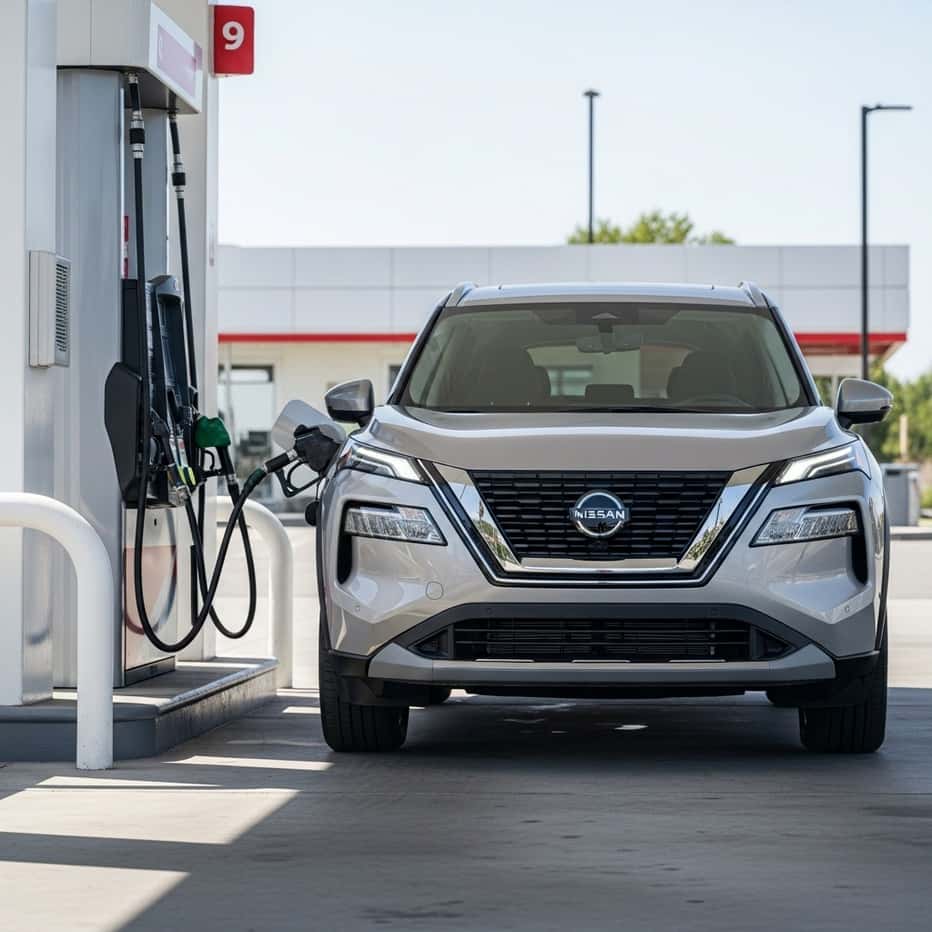
Different Nissan models are built for different priorities, so fuel economy varies by vehicle and configuration. Some smaller cars can reach impressive highway numbers, while compact SUVs aim for balanced efficiency in mixed driving. Even within the same model, MPG can change based on drivetrain, wheels/tires, and how the vehicle is equipped.
Knowing your starting point helps you track improvements. City driving typically produces lower MPG than steady highway cruising. Your Nissan’s onboard computer can estimate fuel economy based on your actual driving, and comparing that week to week is an easy way to see what’s working. For more model-specific guidance, explore our Allen Turner Nissan of Auburn blog.
Driving habits that increase gas mileage
Your driving habits have a major impact on fuel economy. Smooth acceleration and early, gentle braking help avoid wasting fuel, and maintaining a steady speed on longer drives (including using cruise control when appropriate) can support better MPG.
Idling burns fuel without moving you forward. If you are stopped for more than a short moment and it is safe to do so, shutting off the engine can help reduce waste. Also consider how you run your climate control: Auburn summers are hot, but small tweaks like using recirculate and setting the temperature a touch higher can help.
Plan smarter to save fuel. Combine errands into one loop, avoid peak congestion when possible, and let navigation route you around backups. If your Nissan includes an ECO mode, it can be a helpful option for around-town driving where smoothness matters more than quick acceleration.
Regular maintenance for optimal efficiency
A well-kept Nissan uses less gas because it runs with less friction and more consistent combustion. Following the factory maintenance schedule matters, especially with Auburn heat and stop-and-go traffic. Regular oil changes help protect engine components and can support efficiency over time.
Air filters and spark plugs also play a role in fuel economy. Alabama pollen and dusty roads can clog filters faster than you might expect, and a restricted filter can make your engine work harder. If you notice a drop in MPG, rough running, or a check engine light, it’s worth addressing sooner rather than later.
Other helpful checkups include inspecting tire condition, ensuring fluids are at the right levels, and confirming there are no issues with sensors or warning lights. Visit our service center for maintenance based on local driving conditions and your actual routine.
Tire care and its role in fuel economy
Properly inflated tires can improve MPG because underinflation increases rolling resistance. Tire pressure can swing with temperature changes, so it’s smart to check it regularly—especially during seasonal shifts and long hot stretches in Auburn.
Do not skip tire rotations and alignments. Uneven wear adds drag and can reduce efficiency while shortening tire life. A common rotation interval is every 5,000 to 7,500 miles, and alignment checks are a good idea if the vehicle pulls to one side, the steering feels off, or you hit something hard in the road.
When it’s time for new tires, asking about low-rolling-resistance options can help support highway mileage. Keeping tread healthy also improves safety, especially in wet conditions on I-85 and around town.
More ways to get better gas mileage
Small changes add up over time. Removing unnecessary weight from your vehicle can help, and taking off roof racks or cargo carriers when you are not using them reduces wind drag. Keeping windows closed at higher speeds can also reduce aerodynamic drag compared to driving with them open.
If you are shopping for maximum fuel savings long-term, we can help you compare efficient gas models and discuss electrified options that may fit your driving routine. Either way, the fastest wins usually come from driving smoother, maintaining tire pressure, and keeping up with routine service.
Visit Allen Turner Nissan of Auburn today
If you’re in Auburn, Alabama, and want advice on improving MPG, we’re here to help. Contact us to discuss fuel-efficient options or to schedule service, and we’ll help you build a plan based on how and where you drive.
FAQs
What is the quickest way to improve MPG in my Nissan?
Start with tire pressure, smoother acceleration and braking, and reducing unnecessary weight in the vehicle. These changes are quick, low-cost, and noticeable over a few fill-ups.
Does ECO mode actually save gas?
ECO mode can help in stop-and-go driving by encouraging gentler throttle response and efficiency-focused behavior. Savings vary by vehicle and driving style, but many drivers find it useful around town.
How often should I check tire pressure for best fuel economy?
Checking monthly is a solid baseline, and it’s smart to check more often when temperatures swing or before long highway trips. Always use the pressure listed on your driver’s door jamb label.
Do oil changes affect gas mileage?
They can. Fresh oil helps reduce friction and supports efficient engine operation. Following your Nissan’s maintenance schedule is one of the simplest ways to protect MPG over time.
Does idling waste fuel?
Yes. Idling consumes fuel without moving you forward. If you are stopped for more than a short moment and it is safe to shut off the engine, reducing idle time can help.
Will a roof rack or cargo carrier lower MPG?
Often, yes. Anything that increases wind resistance can reduce efficiency, especially at highway speeds. Removing racks or carriers when not in use can help you save fuel.

0 comment(s) so far on How To Improve Gas Mileage in Your Nissan