

Why Regular Nissan Tire Rotations in Auburn, Alabama, Matter
Alabama drivers face unique challenges that make regular tire rotations absolutely essential for their Nissan vehicles. The intense summer heat can push pavement temperatures above 140 degrees Fahrenheit, sudden thunderstorms can create slick roads, and those ongoing construction zones along I-85 can add extra strain to your tires. Tires on Alabama roads work harder than almost anywhere else, so it’s important to get your Nissan’s tires rotated regularly to help them wear evenly, maintain traction, and extend longevity.
Tire Wear: Why the Front Usually Goes First
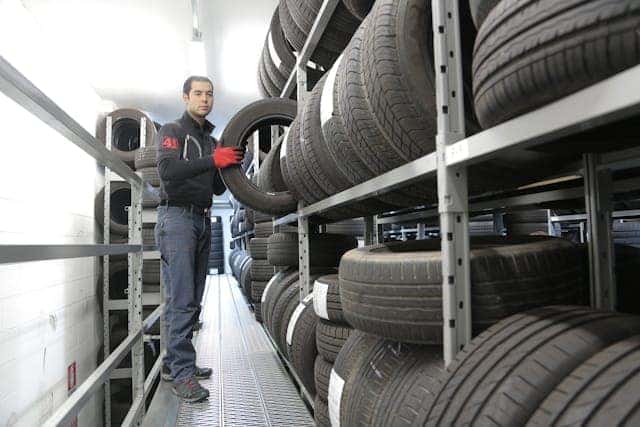
Man in Black Jacket Standing Beside Black Tires by Andrea Piacquadio is licensed with Pexels License
Your Nissan’s front tires bear the brunt of the strain, as they’re involved in steering, braking, and power delivery in front-wheel drive (FWD) models. This intense workload makes the front tires wear faster than the rear ones. Also, the front tires tend to get worn on their outer edges from turning, while the rear tires typically wear more evenly. Every time you navigate Auburn’s campus traffic or accelerate on I-85, your front tires take most of the stress.
All-wheel-drive (AWD) models face their own challenges. The system sends power to all four wheels, but position-specific wear still occurs due to steering forces and uneven weight distribution. If tread depth varies by more than 2/32 of an inch between tires, you might need to replace all four at once to avoid straining the AWD system and potentially damaging your drivetrain.
Skipping tire rotations can dramatically reduce their life span and will mean your front tires will wear out well before the rear ones. Uneven tire wear also means you’ll lose traction on wet roads during Alabama storms and possibly notice pulling or vibrating as wear progresses.
How Often To Rotate Tires on Your Nissan in Alabama
Most manufacturers recommend rotating your tires every 5,000 to 7,500 miles, which often aligns with oil changes. For Auburn drivers who regularly navigate heavy traffic or drive long distances, we suggest an interval of 6,000 to 8,000 miles for FWD vehicles and 5,000 to 7,000 miles for AWD models. A simple rule is to request your Nissan tire rotation in Auburn, Alabama, with every oil change.
Watch for signs that a rotation is overdue. Cupping creates odd dips along the edges of the tread, while feathering makes one side feel rough and the other smooth. You also might experience increased road noise on Auburn’s highways or your steering wheel pulling to one side. Highway driving, heavy loads, or aggressive city driving accelerate wear, so you might need more frequent service.
Rotation, Balance, and Alignment: The Trio Extending Your Tires’ Life Span
Tire rotation, balancing, and alignment work together to maximize the life span of your tires. Tire rotation prevents major differences in tread depth from forming by moving tires to new positions. Balancing corrects uneven weight distribution around each wheel, fixing that concerning “shimmy” you may feel at highway speeds on I-85. Alignment keeps your tires pointing the right way, preventing rapid edge wear that’s especially common on Alabama’s hot, soft asphalt. To maximize value, you can bundle these checks together during your regular service appointment.
Alabama Factors: Heat, Rain, and Road Texture
Alabama’s weather creates unique challenges for your tires. Tire pressure changes about 1 psi for every 10-degree shift in temperature. With Auburn’s often cool mornings and hot afternoons, it’s important to watch your tire pressure closely. Always check the pressure when your tires are cold, ideally before Auburn’s heat kicks in.
Alabama thunderstorms create serious risk. Hydroplaning can occur at speeds as low as 35 mph during heavy rain. Even tread depth across all tires improves traction and braking performance, reducing the risk of hydroplaning.
Auburn’s uneven road surfaces can speed up wear. Construction zones can create abrupt surface transitions, and switching between concrete highways and asphalt streets increases tire stress. Stop-start campus traffic and high-speed I-85 driving also add strain. Regular rotations help tires handle these conditions instead of developing dangerous wear spots.
What We Inspect During a Rotation
A professional tire rotation isn’t just about swapping tire positions. At Allen Turner Nissan of Auburn, our service department measures tread depth across the inner, center, and outer edges to spot alignment issues early. We also check your tire pressure monitoring system and adjust tire pressure to factory specifications. We look for nails, screws, sidewall damage, cracking, and UV wear and verify DOT date codes because tires over 6 years old should be replaced regardless of tread depth.
With the wheels off, we inspect brake pads and rotors for wear patterns that reveal alignment issues or suspension problems. We then take a test-drive to check for vibrations, pulling, or warning lights. This thorough approach helps give you peace of mind on the road.
Your Tire Care Plan Starts Here
Don’t gamble with tire care in Alabama’s tough conditions. At Allen Turner Nissan of Auburn, we understand both the specific rotation patterns for your Nissan model and the unique challenges that Auburn drivers face. Our technicians understand how I-85 commuting, campus traffic, and Alabama weather affect your tires. Want to protect your investment and stay safe? Schedule your tire rotation with us at Allen Turner Nissan of Auburn and feel the difference that specialized Nissan knowledge makes for your daily Auburn drive.

0 comment(s) so far on Why Regular Nissan Tire Rotations in Auburn, Alabama, Matter